My research integrates three-dimensional experiments, computational mechanics, and artificial intelligence to observe, explain, predict, and design the behavior of complex particulate systems.
In Situ μCT Characterization of Granular Materials
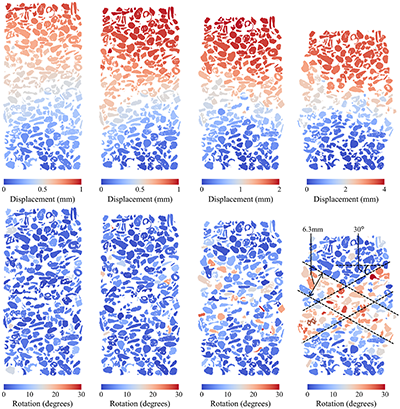
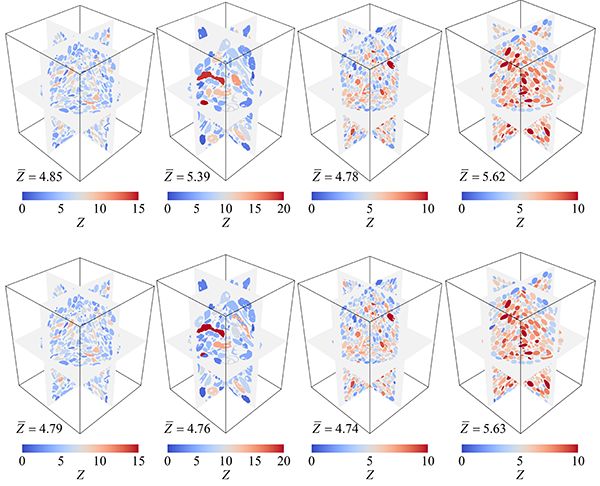
In situ mechanical testing and X-ray microtomography are combined to observe particle rearrangement, rotation, breakage, and pore evolution inside complex granular geomaterials.
Nondestructive three-dimensional observation
Particle- and pore-scale evolution under loading
AI-Based 3D Reconstruction and Tracking
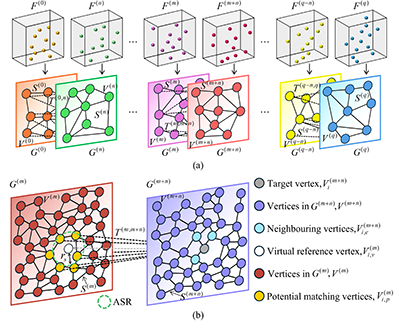
Vision foundation models and physics-informed algorithms are developed for robust particle segmentation, reconstruction, tracking, and breakage analysis.
Large vision models for noisy μCT images
Physics-informed spatiotemporal tracking
High-Fidelity Computational Granular Mechanics
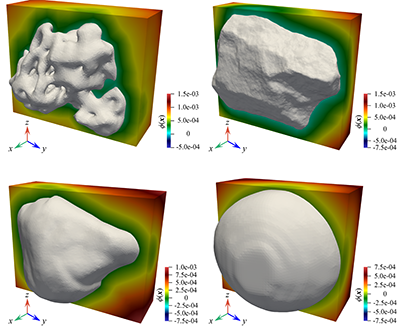
Realistic particle geometries are transferred from imaging into DEM and LS-DEM models to connect particle morphology with multiscale mechanical behavior.
μCT-informed DEM and level-set DEM
GPU-accelerated simulation and digital specimens
Physics AI and Digital Twins
Physics-aware learning and high-fidelity simulation are integrated to create predictive and design-oriented digital twins for granular and architected materials.
Data-updated prediction of complex particulate systems